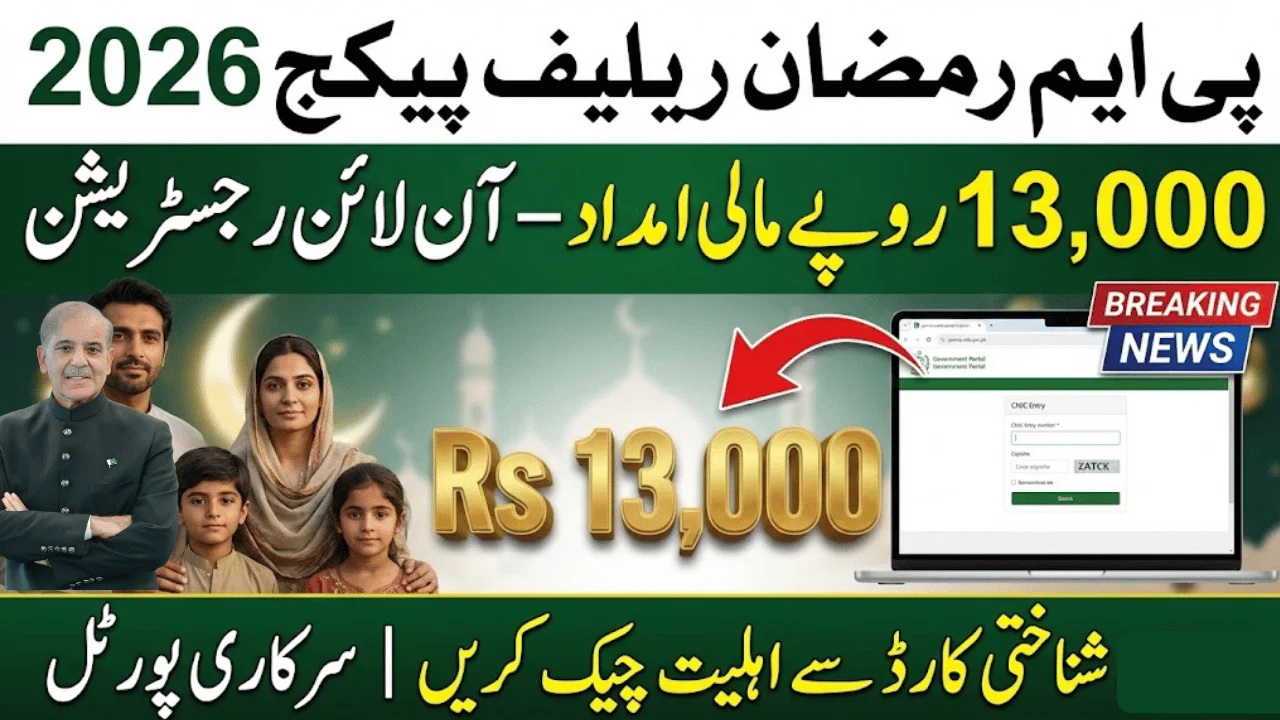
As the holy month of Ramzan approaches, bringing with it a time of reflection, fasting, and community support, the Government of Pakistan has stepped up to ease the burdens of low-income families. The Prime Minister’s Ramzan Package 2026, announced by PM Shehbaz Sharif, is a beacon of hope for millions facing economic challenges amid rising inflation. This initiative not only provides timely financial relief but also embodies the spirit of generosity that defines Ramzan. In this comprehensive guide, we’ll dive deep into everything you need to know about this vital program. Prime Minister Muhammad Shehbaz Sharif launches the PM Ramzan Package, 2026.
Cheak Now
What is the Prime Minister’s Ramzan Package 2026?
The Prime Minister’s Ramzan Package 2026, also known as the PM Ramzan Relief Package or simply the Ramzan Relief Package 2026, is a government-led initiative designed to offer financial assistance to vulnerable households during the sacred month of Ramzan. Launched on February 14, 2026, by Prime Minister Muhammad Shehbaz Sharif, this program aims to alleviate the financial strain caused by everyday expenses like food, utilities, and essentials, allowing families to focus on their spiritual observances without worry.
At its core, the package is a one-time cash transfer program, distributing Rs13,000 to each eligible family. With a total budget of Rs39 billion, it targets approximately 12.1 million low-income households across all four provinces, Gilgit-Baltistan (GB), and Azad Jammu and Kashmir (AJK). This marks a significant shift from previous models that sometimes involved subsidized goods at utility stores, moving instead to a fully digital, cash-based system to ensure transparency and dignity for recipients.
Why is this package so important? Ramzan, expected to begin on February 19, 2026, in Pakistan (subject to moon sighting), is a period when household expenses often spike due to iftar preparations, charitable giving, and family gatherings. For many low-wage earners, daily laborers, widows, and seniors, this can be overwhelming. The PM’s Ramzan Package steps in as a safety net, drawing from the Benazir Income Support Programme (BISP) framework to identify and support those in need. It’s not just about money—it’s about fostering a sense of security and community during a time of fasting and prayer.
From my perspective, having seen similar programs evolve over the years, this 2026 edition stands out for its emphasis on digital inclusion. In a country where mobile penetration is high, using bank transfers and mobile wallets means fewer queues and less hassle, which is a game-changer for busy families. Imagine a single mother in Rawalpindi receiving her aid directly into her EasyPaisa account—she can buy groceries at her local store without the stigma of waiting in line. This personal touch makes the program feel more relatable and efficient.
Historical Context of Ramzan Relief Initiatives in Pakistan
To truly appreciate the Prime Minister’s Ramzan Package 2026, let’s take a step back and look at its evolution. Government relief during Ramzan has been a staple in Pakistan for decades, starting with subsidized food items at utility stores in the early 2000s. These early efforts focused on essentials like flour, sugar, and ghee, but they often faced criticism for distribution inefficiencies, such as long queues and reports of substandard quality.
By 2020, the approach began shifting toward cash assistance, influenced by global best practices in social welfare. The Ehsaas Program under previous administrations laid the groundwork, using data from the National Socio-Economic Registry (NSER) to target aid more accurately. The 2026 package builds on this, integrating lessons from past years—like the 2025 edition, which saw complaints about delayed payments—to ensure smoother rollout.
What sets the 2026 version apart is its scale and tech-savvy approach. With Rs10 billion already allocated through BISP and an additional Rs29 billion approved by the Economic Coordination Committee (ECC), the funding is robust. This isn’t just a handout; it’s a strategic move to combat poverty, with built-in mechanisms for accountability, including third-party audits and real-time tracking.
Who Oversees the Program?
The Ministry of Poverty Alleviation and Social Safety leads the charge, working closely with BISP, the State Bank of Pakistan (SBP), and telecom partners. Federal Minister Syed Imran Ahmad Shah has been hands-on, reviewing call centers and directing immediate crediting of funds. This collaborative effort ensures that the aid reaches the right people without leakage.
Key Features & Benefits
The Prime Minister’s Ramzan Relief Package 2026 is packed with features that make it user-friendly and impactful. Here’s a breakdown of the standout elements:
- Cash Assistance Amount: Each qualifying family receives Rs13,000 as a one-time payment, an increase from previous years to account for inflation. This can cover essentials like groceries, medicines, or even school fees for children.
- Digital Disbursement: Gone are the days of physical handouts. Funds are transferred directly via bank accounts, mobile wallets (e.g., JazzCash, EasyPaisa), or digital platforms, promoting a cashless economy and reducing corruption risks.
- Targeted Beneficiaries: Using NSER data, the program prioritizes low-income households, including those not enrolled in other Kafalat programs. This includes widows, daily wage workers, and families below the poverty line.
- Nationwide Coverage: The package extends to all provinces, GB, and AJK, ensuring no region is left out. About 2.1 million families outside existing sponsorship programs will benefit from Rs28 billion allocated specifically for them.
- Support Infrastructure: A dedicated helpline (9999), mobile app, and online portal allow easy eligibility checks and grievance redressal. The call center at the National Telecommunication Corporation (NTC) handles thousands of queries daily.
- Transparency Measures: Third-party audits, real-time monitoring, and digital trails ensure funds are used appropriately. This builds trust and minimizes misuse.
These features translate into real benefits for users. For instance, the cash aid helps families afford nutritious iftar meals, reducing malnutrition risks during fasting. It also boosts local economies as recipients spend at neighborhood shops. Personally, I recall a friend in Lahore who used similar aid last year to host a community iftar—small acts like these strengthen social bonds.
How the Benefits Help Users
Beyond the financial boost, the PM Ramzan Package 2026 empowers families by giving them choice. Unlike subsidized goods, cash allows customization—buy halal meat for one family or fruits for another. It also encourages financial literacy, as many recipients open their first bank accounts. In rural areas, where access to markets is limited, this direct transfer saves time and travel costs.
Comparison with Alternatives
While the Prime Minister’s Ramzan Package 2026 is the flagship program, it’s worth comparing it to previous years and other relief initiatives to see its improvements.
Comparison Table: PM Ramzan Package 2026 vs. Previous Years
| Aspect | 2026 Package | 2025 Package | 2024 Package |
|---|---|---|---|
| Budget | Rs39 billion | Rs30 billion | Rs25 billion |
| Aid Amount per Family | Rs13,000 | Rs10,000 | Rs7,500 |
| Beneficiaries | 12.1 million families | 10 million families | 8 million families |
| Disbursement Method | Digital (bank/mobile wallets) | Mixed (cash/subsidized goods) | Primarily subsidized goods |
| Coverage | All provinces, GB, AJK | All provinces | Limited to major cities |
| Key Improvement | Enhanced transparency & audits | Digital pilot | Basic eligibility via NSER |
As seen in the table, the 2026 package offers higher aid and broader reach, addressing gaps like urban-rural disparities. Compared to alternatives like provincial programs (e.g., Punjab’s Ramzan Negahban Package), the federal one is more inclusive, covering AJK and GB.
Personal insight: In 2024, many complained about queue times at utility stores. The shift to digital in 2026 feels like a direct response, making it far superior for modern families.
Vs. Other Social Welfare Programs
Unlike the ongoing BISP Kafalat, which provides quarterly stipends, this is a seasonal boost. It complements Ehsaas initiatives but focuses solely on Ramzan relief, filling a niche for holiday-specific needs.
Pros & Cons
No program is perfect, so let’s weigh the advantages and drawbacks of the Prime Minister’s Ramzan Relief Package 2026.
Pros
- Timely Relief: Arrives just before Ramzan, helping with immediate expenses.
- Inclusive and Fair: Data-driven targeting reduces favoritism.
- Efficient Delivery: Digital methods save time and promote banking inclusion.
- Economic Boost: Injects funds into local markets, supporting small businesses.
- Government Accountability: Audits ensure taxpayer money is well-spent.
Cons
- One-Time Nature: Doesn’t address long-term poverty; families may need ongoing support.
- Tech Barriers: Rural users without smartphones might struggle with digital access.
- Eligibility Disputes: Some deserving families could be missed if NSER data is outdated.
- Inflation Adjustment: Rs13,000 might not fully cover rising costs in high-inflation areas.
- Awareness Gaps: Not everyone knows about the helpline or app.
Overall, the pros outweigh the cons, especially with efforts to improve outreach.
User Tips or Updates
As of February 20, 2026, disbursements have begun, with 1.4 million accounts already credited. Here are some practical tips to make the most of the PM Ramzan Package 2026:
- Check Eligibility Early: Send your CNIC number to 9999 via SMS or use the BISP portal. Response is quick—usually within minutes.
- Update Your Details: If your family circumstances have changed (e.g., new address), visit a local BISP office to update NSER records.
- Secure Your Account: If receiving via mobile wallet, enable two-factor authentication to prevent fraud.
- Budget Wisely: Use the Rs13,000 for essentials first—stock up on non-perishables like rice and lentils before prices peak.
- Seek Help if Needed: Call the 9999 helpline for queries; operators are trained and multilingual.
Relatable example: A taxi driver in Rawalpindi I know used last year’s aid to buy Eid clothes for his kids. This year, with the increased amount, he plans to donate part to a local mosque—turning relief into charity.
For updates, monitor official sites like pid.gov.pk or BISP’s app, as moon sighting could adjust timelines.
Latest Version Details
The package is in full rollout mode, with ECC approving immediate releases. No major changes expected, but stay tuned for any extensions.
FAQs
What is the eligibility criteria for the Prime Minister’s Ramzan Package 2026?
Eligibility is based on NSER data, targeting families with low PMT scores (poverty measure). Priority goes to BISP enrollees and those not in other programs. Check via CNIC on 9999.
How can I apply for the PM Ramzan Relief Package?
No separate application needed if you’re in NSER. If not, register at a BISP tehsil office. Funds are auto-credited to verified accounts.
When will the money be disbursed?
Disbursements started in mid-February 2026, aiming for completion before Ramzan begins on February 19.
What if I don’t receive the aid?
Contact the 9999 helpline or visit a BISP center with your CNIC. Grievances are resolved within days.
Is the package available in AJK and GB?
Yes, it’s nationwide, including AJK and GB, ensuring equitable distribution.
Conclusion
The Prime Minister’s Ramzan Package 2026 is more than financial aid—it’s a commitment to supporting Pakistan’s most vulnerable during a time of spiritual renewal. With Rs13,000 reaching millions, enhanced digital features, and a focus on transparency, this program sets a new standard for welfare initiatives. As Ramzan draws near, it reminds us of the power of community and government working hand-in-hand. If you’re eligible, check your status today and make the most of this opportunity. For more updates, visit official government portals or follow reliable news sources. Stay blessed this Ramzan!